
There is no shortage of design decisions when planning your dream kitchen, but few are as impactful as choosing your kitchen countertops. Not just any surface, your kitchen counters are a workhorse, subjected to spills, hot pots, sharp knives, and all the chaos of a busy kitchen. On top of that, you want a look and feel that you can enjoy every day.
Given the importance of your counters, it’s natural to want to understand how different options compare. A few factors tend to be most important, including performance, aesthetics, maintenance requirements, and the cost per square foot.
Many homeowners tell us that they feel overwhelmed by all the design options, so this post will provide a high-level countertop material comparison. Although we’ll touch on many different surface materials, we’ll explain why, for most people, the main choice is between natural stone and engineered stone countertops.
A Leading Choice: Engineered Quartz Countertops
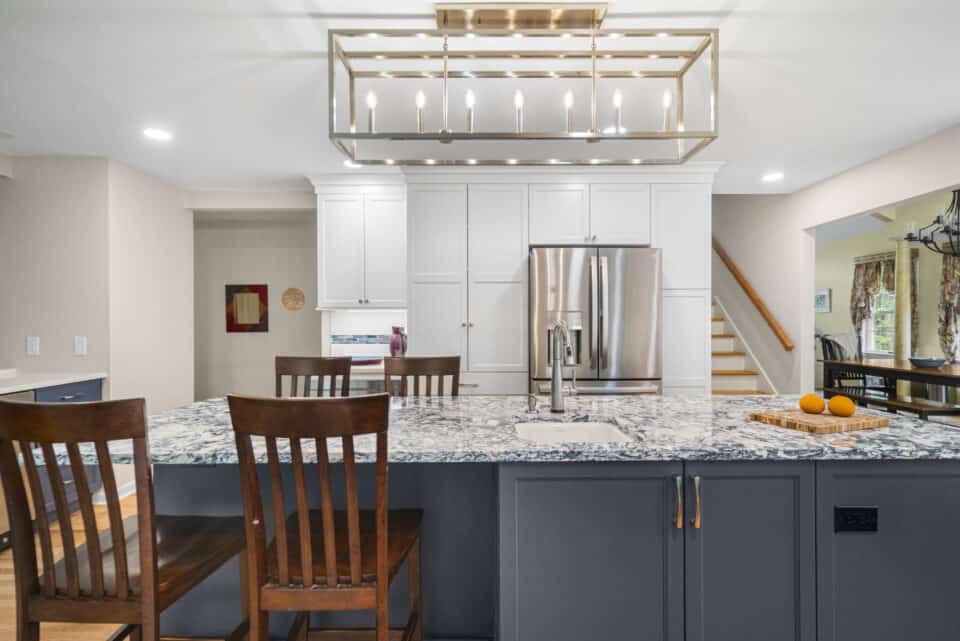
In our experience, engineered quartz is the best option for most homeowners. In recent years, quartz has emerged as the top choice for durability and ease of care in countertop materials. Unlike natural slabs, engineered stone countertops are man-made materials, composed primarily of natural quartz mixed with a small amount of different resins and pigments.
The biggest advantage of engineered quartz stems from its convenience and sturdiness. Quartz is highly resistant to scratches, dents, and chips and does not require resealing. Because it is non-porous, it doesn’t trap bacteria and resists stains, even tough ones like olive oil and wine.
Visually, engineered stone countertops offer a more uniform appearance compared to natural stone. That means you can find a good fit regardless of whether you want a pure white slab or one that mimics the patterns of marble. If you want a more daring look, quartz can be shaped with jagged and decorative edges to create extra texture in your home.
In short, if you want an elegant look without muss or fuss, quartz countertops are right up your alley.
The Natural Contender: Granite Countertops
For a natural and classic look, granite countertops still set the standard. Granite is the most common natural stone used for countertops, still prized for its performance and aesthetics.
For many homeowners, granite counters are essential to a luxury gourmet kitchen, primarily for their looks. But granite also has superior heat resistance to quartz. You can generally place hot pans directly on the surface (though we recommend hot pads for safety, just in case). Granite is heat-, scratch-, and wear-resistant, which has also driven its enduring popularity in kitchen remodels.
However, it is not truly set-it-and-forget-it. As the sealing wears away, granite can stain relatively easily. As a result, it needs to be resealed every few years, creating recurring maintenance needs and costs.
Luxury & Patina: Soapstone and Marble Countertops
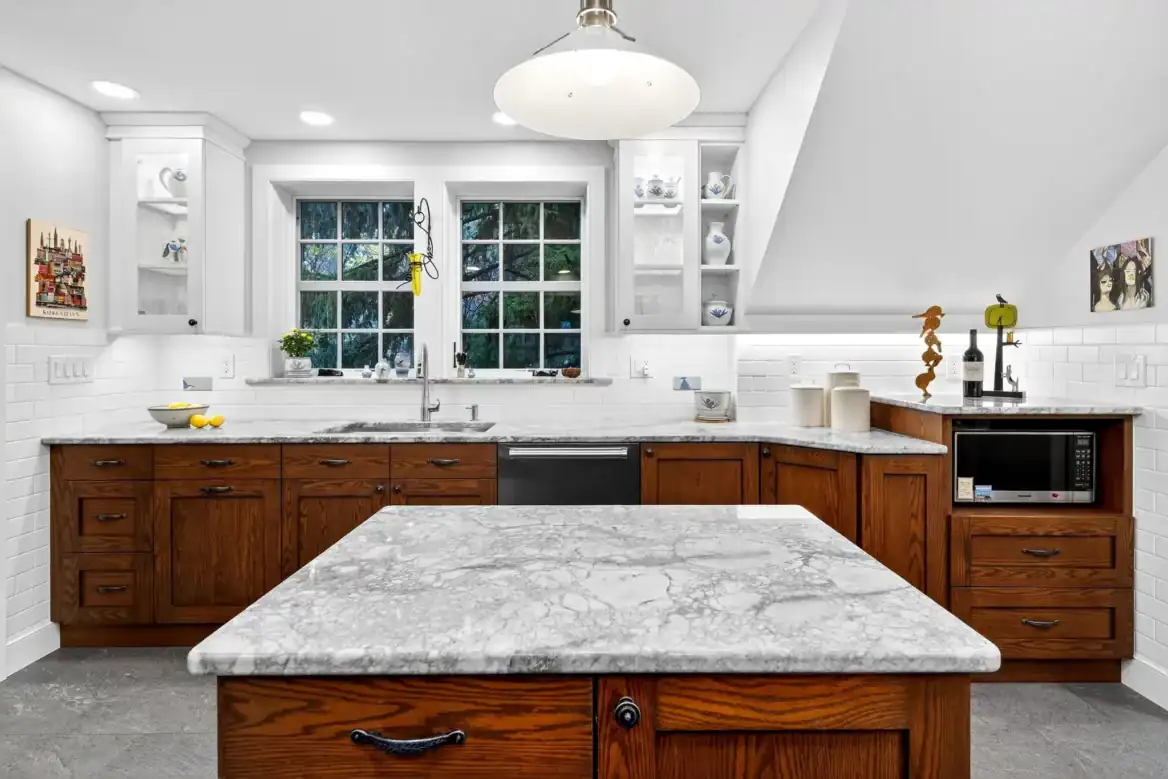
For those prioritizing an aesthetic “wow factor” over utility, marble and soapstone are the top contenders. Marble is known for its unique veining and luxurious appearance, making it a true centerpiece in any kitchen. However, marble requires regular maintenance and can be sensitive to acidic substances. Regular resealing is a necessity if you want to keep marble countertops in top shape.
Alternatively, soapstone is a natural stone that is durable and non-porous. It offers a beautiful, matte aesthetic that feels soft to the touch. However, soapstone is softer than granite, making it more prone to scratches. If you want to maintain its appearance, you’ll also have to oil the soapstone frequently.
The Modern & Industrial: Porcelain and Concrete
If your style leans toward the industrial or ultra-modern, you can look beyond stone countertops. Concrete offers a raw, custom look that can suit an industrial-themed kitchen. However, it requires more maintenance. Since concrete countertops can chip and scratch, they require sealing to protect against damage and stains.
For a sleeker look, porcelain is a top option. Porcelain countertops are known for their durability and low maintenance. They are nearly impervious to heat, UV light, and chemicals. Porcelain countertops are non-porous, scratch-resistant, stain-resistant, and do not require sealing.
Wood and Warmth: Butcher Block Countertop Surfaces
To add organic warmth and a rustic feel, you can incorporate a butcher block surface into your kitchen. For example, many interior designers use stone for the perimeter countertops with a wood finish for a small kitchen island.
This can create an inviting and low-key look while maintaining a luxury aesthetic. At the same time, you can cut and chop directly on a butcher block counter.
That said, if you use them as massive cutting boards, butcher block counters will develop scratches and other wear marks. Butcher block countertops require regular maintenance and can be prone to staining and damage from heat. To prevent them from absorbing moisture, they need frequent applications of food-safe oil, making these counters less convenient for everyday use than they might seem at first.
Budget-Conscious Options: Laminate and Solid Surface
While you may come across information about budget options like laminate and solid surface materials, these aren’t commonly used in custom or high-end remodels. Laminate is the most affordable countertop material available, but it has a shorter lifespan (10 to 20 years) and is more easily damaged by heat and knives, which obviously isn’t what you’re looking for in a kitchen.
Solid surface countertops are man-made and non-porous, making them hygienic and easy to clean. However, solid surface materials can get scratched easily and are susceptible to heat damage.
Designing Your Kitchen Countertops: Choosing Among Popular Countertop Materials
In light of all the details about kitchen countertops, the fact remains that your personal preferences play a huge role in determining the best material for your remodel. Our design team has found that either quartz or stone is best for most homes, but one of the benefits of working with an experienced remodeler is the ability to get tailored insights into the materials that are ideal for your needs.
Upscale Remodeling is a design-build firm in the Ithaca area that’s been in the business for over three decades. We handle custom remodels from beginning to end, including brainstorming, conceptual design, project planning, permitting, construction, and inspections. Our full-service approach enables us to fully meet the highest standards for design, execution, and service to our clients.
If you’re planning a kitchen remodel, we’d love to hear from you. Contact us today to schedule a consultation to discuss how we can make your dream kitchen a reality.