
The kitchen and living room are two spaces that get plenty of regular use in any family’s home. They also shape the feel of the main floor, which is why more and more homeowners are prioritizing interior design that enhances seamless flow in and around these rooms.
When remodeling, you have the option of expanding the available area for the kitchen and living room with a home addition. Absent an addition, you may be limited by certain aspects of your home’s floor plan. But regardless of the amount of space you’re working with, there are steps you can take to optimize layout and enhance flow.
In this post, I’ll cover five examples from our remodeling portfolio that can serve as a demonstration of certain design ideas and, I hope, give you inspiration for what you can accomplish with your remodel.
#1: An Inviting and Unifying Color Palette

In this project, we worked with an Ithaca homeowner to create a kitchen and living room that are well demarcated but remain connected enough to feel like a single space.
One key element of this design is the warm tones throughout. A cohesive color scheme maintains a visually appealing space and naturally helps connect the kitchen and living room. In particular, we chose soothing paint colors throughout the space to create a cohesive look. On top of that, using natural materials kept the vibe warm and inviting, and sticking to a minimal color palette visually streamlined the space and set a calming tone in an open floor plan like this one.
#2: Savvy Layout and Design Elements
While the previous project is a great example of the power of color in interior design, it’s also an example of how you can harness layout choices to create flow.
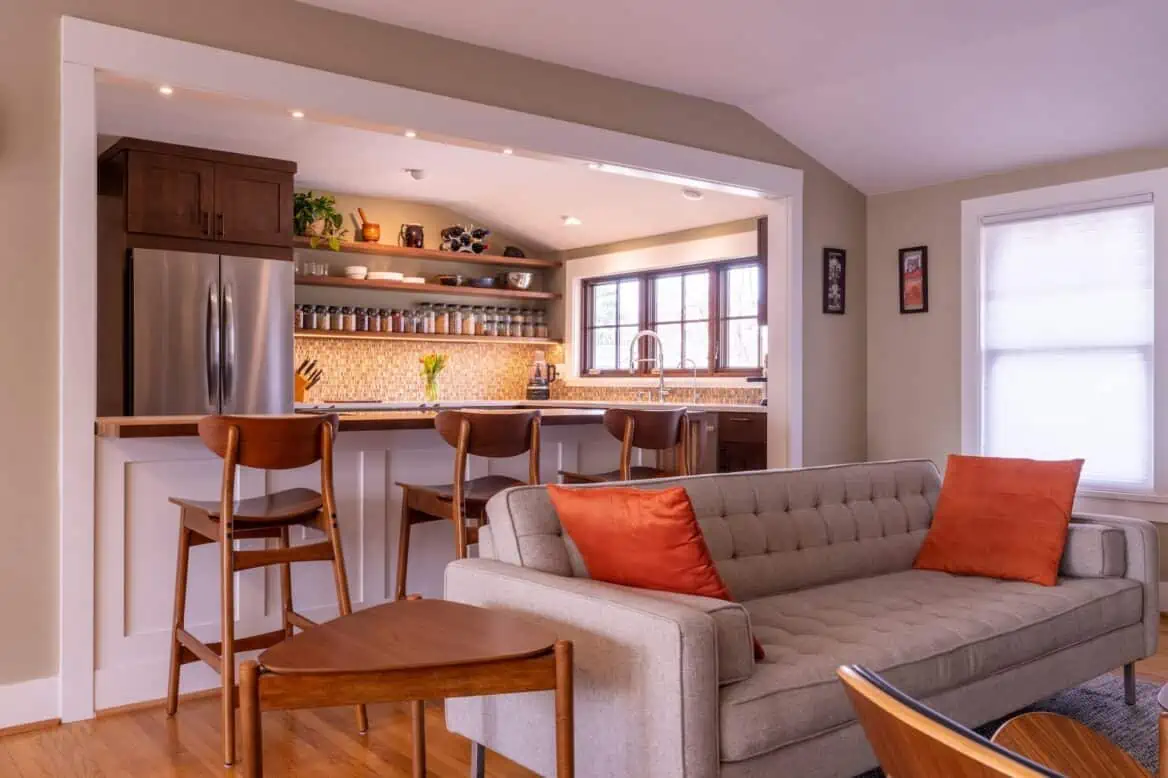
Furniture placement can establish the boundaries between the kitchen and living room, and in this case, we placed a sofa with its back to the kitchen to create a natural separation between the cooking and living areas. In between, the bar (which doubles as a dining space) helps effectively delineate the kitchen from the sitting room.
In this way, we worked to achieve the balance that our client sought — a space with clearly defined kitchen and living areas that feel like they fit together. Certain design elements act as finishing touches that further advance this goal. For example, we used multiple focal points to make this relatively small open space appear bigger:
- Open shelves in the kitchen feel airy and allow the homeowners to display items with visual interest
- An area rug adds color and reinforces visual separation in this small kitchen and living room combo
- Modern furniture offers a touch of style, including a distinct coffee table and unique chairs
#3: The Centerpiece Kitchen Island

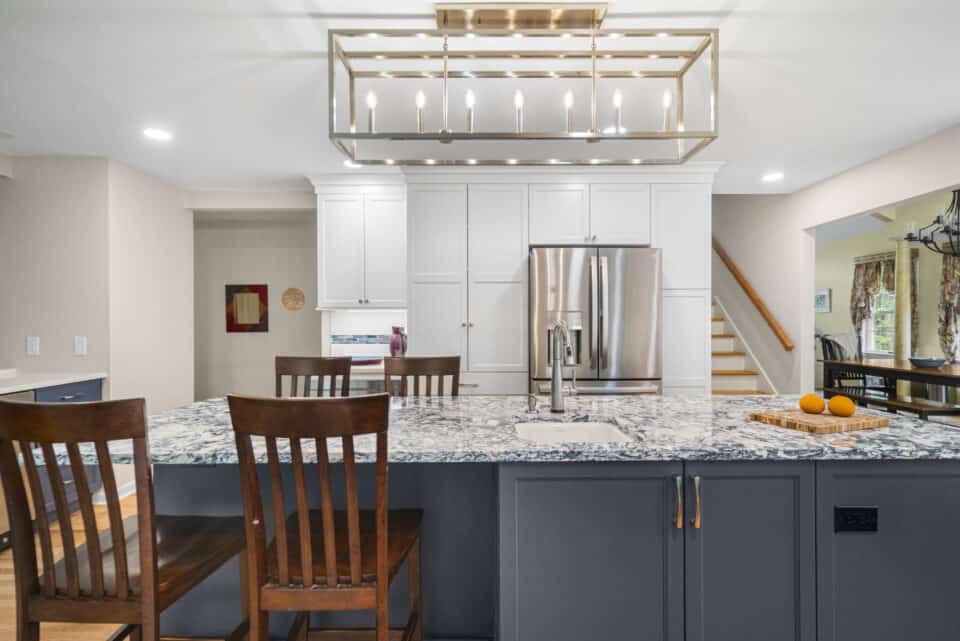
Putting in a kitchen island is one of the most compelling ways to make your kitchen and living space more dynamic. In this remodel in Southwest Ithaca, we put in an extra-long island that features a built-in sink, plenty of counter space for serving or meal prep, and room to pull up two chairs. Although the homeowner chose not to install a stovetop in this island, a central cooking island can also accommodate social cooking for families and friends while entertaining.
The island and kitchen area fit into an open concept with the adjacent living room. You can easily see between the two areas, but color and furniture serve as powerful visual dividers. The kitchen features white paint and a light wood floor, while the living space has darker walls and flooring.
In this remodel, built-ins provide extra storage space and establish a visual transition between the kitchen and living room. We also used multiple light sources — including the impressive lighting fixture above the island — to enhance the visual depth and appeal of the open floor plan.
#4: A Fully Open Design

This home’s main floor is a classic example of an open floor plan that connects different zones to bring family members together. Open plan living rooms are connected to the dining area, or kitchen, and sometimes both. During remodeling, unnecessary walls are knocked out to create a free-flowing space in an open layout.
With that open area, you can position living room furniture and other items, like the dining table, to create flow. Careful selection of furniture placement limits clutter and enhances function in an open space. In this home, contemporary furniture pieces denote the sitting area and dining space.
Just as a uniform ceiling creates continuity in an open kitchen and living room, extending the same flooring throughout the space has the same effect. A blue accent wall provides a touch of color with wall decor that creates a common focal point to tie the open kitchen and living room together.
This design approach is especially compelling for gregarious hosts since fully open kitchen and living room layouts provide large spaces for entertaining friends and family.
#5: A Built-In Breakfast Nook
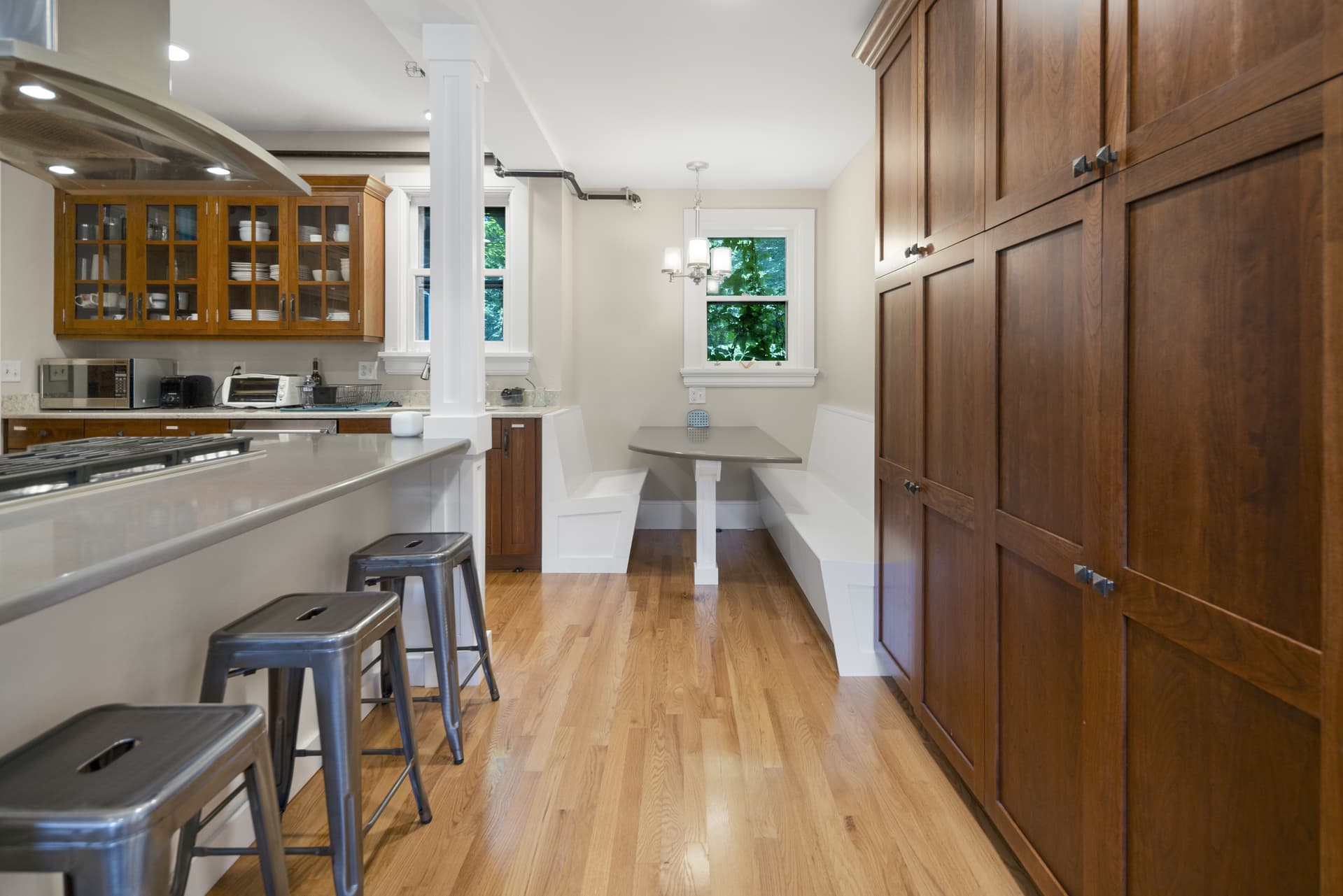
This remodeling project shows how you can capture some of the spirit of a combined kitchen and living room, even if your home’s footprint doesn’t allow you to fully embrace the open-concept design.
In this project, the open plan kitchen doesn’t open up to the living room but rather to an oversized breakfast nook or dining area. The benches serve as a window seat where people can gather, students can do homework, or you can sip morning coffee while remaining directly connected to the kitchen.
In this way, the furniture arrangement delineates functional zones without full physical barriers. Even though the integrated breakfast nook is a small space, it can be a meaningful contributor to daily life.
#6: A Corner Fireplace Bringing the Entire Space Together
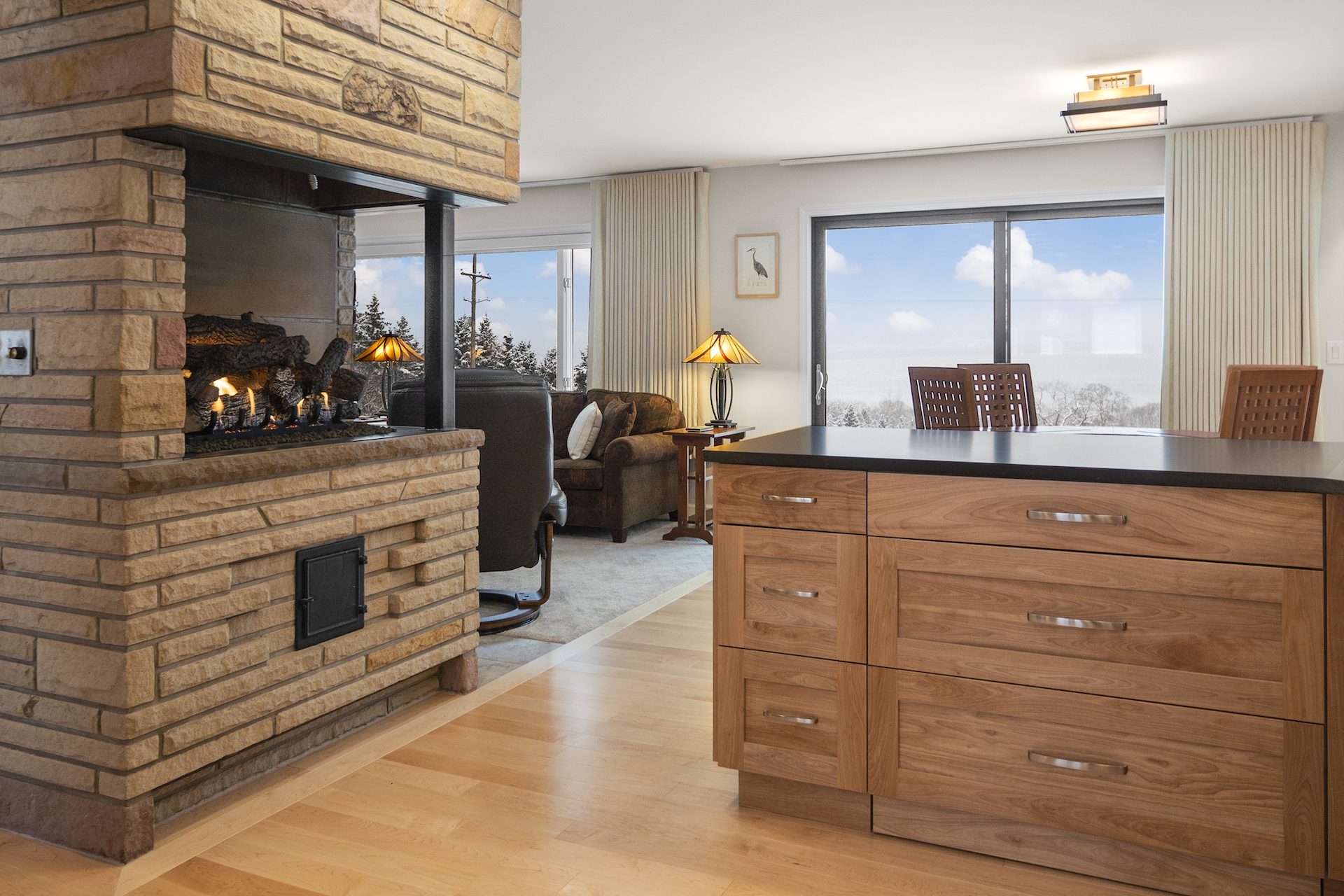
In this home addition and remodel, we created a main floor that is unified despite having several separate spaces with their own functions. At the heart of this layout is an elegant corner fireplace that ties together each component of this welcoming space.
The fireplace is part of a cozy yet classy feel that emphasizes visual separation between the kitchen and living room without blocking the view between them. The adjacent custom built-in shelving provides ample storage while further integrating the different spaces into a cohesive design.
In this remodel, we also wanted to take advantage of natural light, which improves the ambiance of open spaces and creates a bright, airy feel. Nearly full floor-to-ceiling windows and sliding doors help maximize natural light, reinforcing the open feel. White walls reflect light, making open spaces like this one feel more spacious and illuminated.
But because you can’t rely only on natural light, we used a decorative overhead fixture and desk and floor lamps to create a warm glow that complements a roaring fire.
Finding Your Kitchen and Living Room Design Style
There are multiple ways to design your main floor to maximize flow, comfort, aesthetics, and functionality.
At Upscale Remodeling, we specialize in custom projects, which means our design ideas are based on the specifics of your space, your needs, and your vision. For us, there’s no one-size-fits-all project. Instead, we tailor every remodeling solution so that it feels truly unique.
We’ve been serving the Ithaca area for more than 30 years and take great pride in our track record of delivering high-impact remodels for our neighbors. As a design-build firm, we handle all aspects of your remodel, from initial brainstorming to the final inspection, all under one contract and with a single point of contact.
If you’re looking to upgrade your main floor’s kitchen, living room, family room, or any other space, we invite you to contact us today to schedule a consultation.