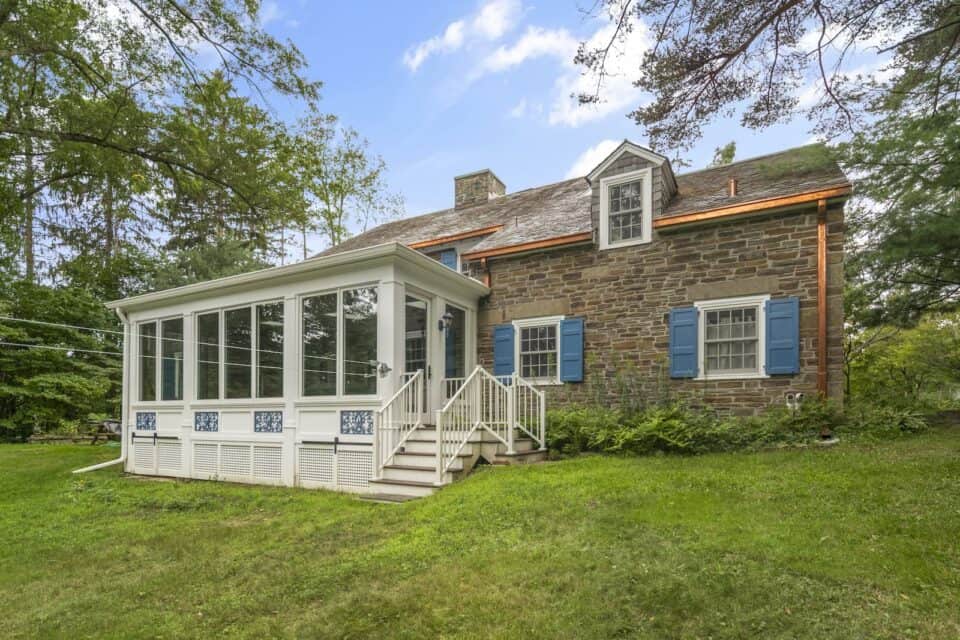


Home remodeling can take many forms, the most intense of which is a structural remodel.
Structural remodeling doesn’t have a strict definition, but it almost always involves modifying the framework or skeleton of a house. In practice, this means dealing with load-bearing elements. If your vision for a remodel involves removing walls or beams or doing major foundation repairs, you’re entering the realm of structural remodeling.
The stakes are higher with structural remodeling because it affects how the weight of a house is supported. Getting it right is essential to your home’s structural integrity and safety.
But is this type of remodeling really what your home needs? How does it compare to other types of remodeling? And what are the relative pros and cons of each approach?
In this post, I’ll tackle these questions and, without getting too deep into the technical details of buildings and construction, provide some context about structural remodeling and other ways to upgrade your home environment.
Levels of Home Remodeling
Home projects can range from simple, cosmetic remodeling to more dramatic changes to a building’s structure. Remodeling projects generally fall into one of four categories:
- Simple refresh
- Pull-and-replace
- Revised layout
- Structural remodel
While not every project falls squarely into one of these categories, understanding the contours of each type of remodel can help you understand the degree of demolition, construction, and other work involved. The level of remodeling also affects cost and other practical issues like dust control and whether it’s necessary to obtain permits.
In the following sections, I’ll provide more detail about each type of remodel and what it entails for both the homeowner and the contractors and builders.
Simple refresh
In this type of remodel, you’re looking to give some part of your living space a new look and feel. This often involves updating multiple elements to breathe new life into a room.
In some cases, this is only a cosmetic remodel. For example, you may want to repair and repaint walls that were stained by minor water damage. Or maybe you would like to refinish cabinets to achieve a more contemporary look.
The options are nearly endless, but in our experience, homeowners frequently seek out these projects when they just get fed up with seeing a particular flaw in their home day after day.
As you would expect, this kind of remodel requires the least amount of time and money. While doing the work properly is always important, a simple refresh doesn’t modify the structural elements of your home, so it poses little risk of complications.
We’ve found that some of our clients use a simple refresh as an opportunity to upgrade related accessories, such as the cookware in their kitchen or the furniture in their living room. This can make the whole space feel fully furnished and outfitted to match the new look.

Pull-and-replace
A pull-and-replace remodel is when you swap out different elements within a room’s existing footprint. Examples of potential components of a pull-and-replace project include:
- Changing out light fixtures
- Replacing old cabinets with new ones
- Updating kitchen appliances
- Installing new windows for better insulation and energy efficiency (without modifying the size or placement of the windows)
- Re-tiling a shower
- Putting in a new kitchen floor or living room carpeting
A pull-and-replace approach can provide a significant return on investment for homeowners. There’s no need to relocate water or electrical hookups, which simplifies the remodeling process and helps keep costs down. At the same time, the benefits of upgrading different components can be huge for both functionality and visual appeal.

Revised layout
This type of home remodel involves rearranging where things are within a space in your home without making changes to load-bearing walls or other aspects of its underlying structure.
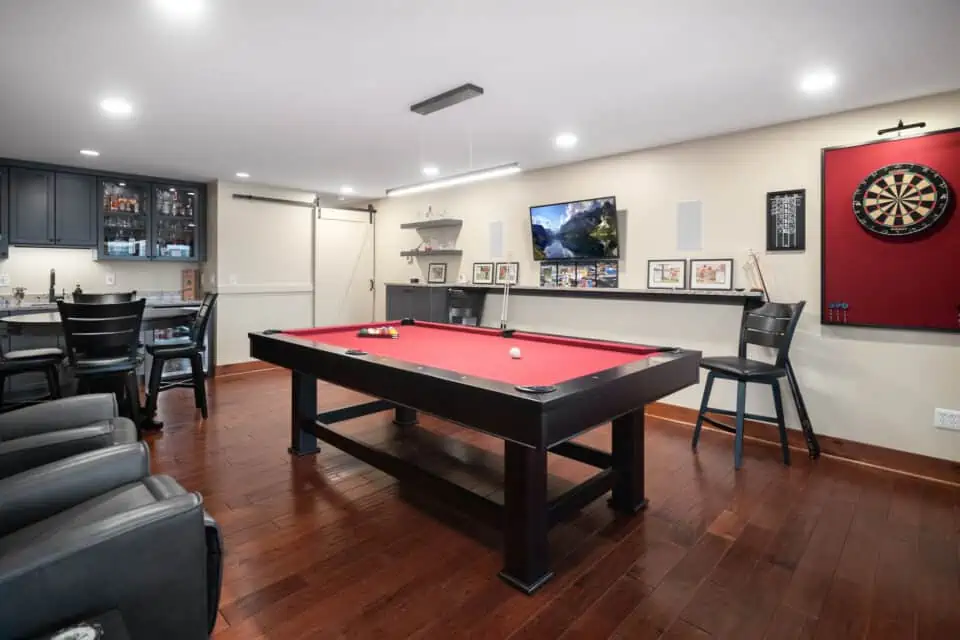
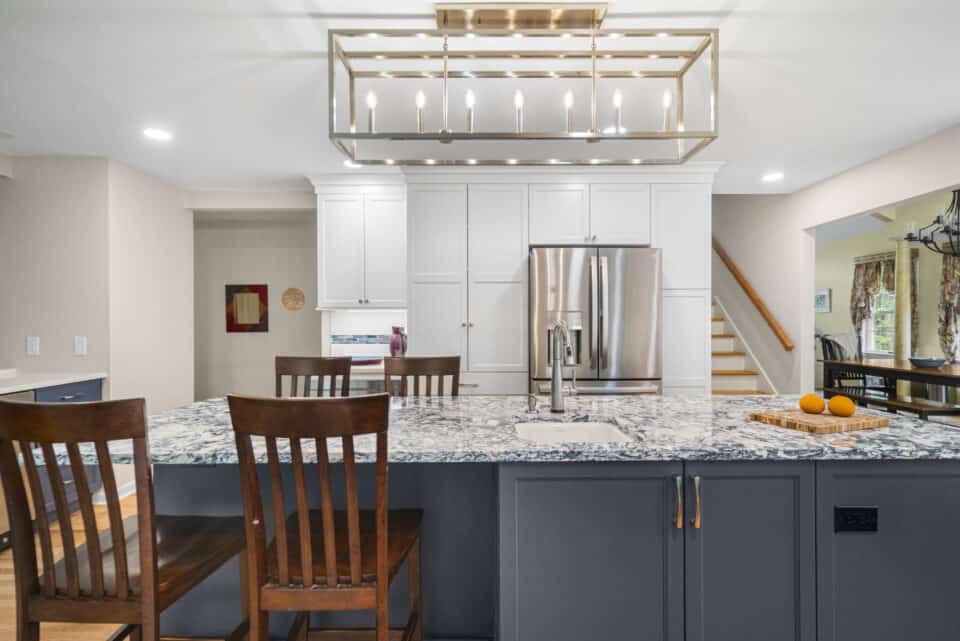
A popular take on this kind of home remodel is to renovate a bathroom. This might involve adding a walk-in shower, a standalone tub, or a luxurious built-in double vanity. Another type of layout revision is to add a kitchen island for entertaining and meal prep. Many straightforward basement remodels, such as adding a game room, home gym, or basement bar, fall into this category as well.
In each case, there’s a change being made to the floor plan, and it may require electrical work or moving plumbing connections. This means additional demolition and construction, but it doesn’t involve modifications to any weight-bearing structure.
These renovations come with higher costs than basic remodeling. The risk of unexpected costs also increases since some preexisting issues may not be identifiable until the demolition process has started.
That said, layout upgrades can open up space and completely change the usability and attractiveness of a room. For property owners, these remodels can pay off by increasing both the quality of life while living in the house and resale value when it comes time to sell.

Structural remodeling
Structural remodeling is the most intense type of remodeling project because it includes modifications to the core components of a house.
There are myriad examples of structural changes that can be included in these projects, including:
- Removing, moving, or adding load-bearing walls, beams, or columns to open up space or connect rooms
- Putting in larger windows or an extra window
- Making foundation repairs
- Adding an extension or an additional story
- Relocating stairs
- Building out an entirely new bathroom
- Making major changes to the roof
These are more complex projects requiring experienced designers and builders. Although it’s not new construction, these projects typically need a structural engineer to stamp the design and verify that there’s no safety risk for the homeowner.
These reviews also account for local environmental conditions, ensuring the remodel holds up during storms, heavy snow, or other severe weather.
Beyond the initial design, the builders may need to get structural remodeling permits, although the exact paperwork required depends on the scope of work and local building codes. Those codes will almost certainly stipulate the need for inspections before formally signing off on the work.
All of these factors make structural remodels expensive for homeowners. Expertise is needed at every stage, and the work often requires more builders and more materials. However, structural remodeling can have tremendous benefits from resolving a serious underlying problem and/or transforming a home entirely.
When Are Structural Remodels Necessary?
Structural remodeling is necessary when there’s a major problem with your home that can only be resolved by repairing or replacing load-bearing elements.
An underlying problem can threaten your house’s structural integrity, which can have short- and long-term consequences. Improper load and weight distribution can contribute to issues that worsen over time, like uneven floors, water leaks, or poorly fitting doors and windows. Although less common, worst-case scenarios involve a risk of partial or complete building collapse.
When facing these risks, there’s little alternative to structural remodeling.
When Are Structural Remodels Desirable?
Even when it’s not necessary, structural remodeling may be desirable if you want to make fundamental changes to your home that can’t be done with any other type of remodeling.
In these cases, whether structural remodeling is worth doing becomes much more subjective. These projects are more expensive and disruptive, so they need to deliver bigger benefits to tip the scales in their favor.
Every homeowner has their decision-making calculus, but we tend to find that there are certain situations in which a structural remodel makes the most sense.
- Adding space: A bigger project may be the right choice if you need more square footage, but moving to a bigger home isn’t an option. Adding a wing, story, or fully remodeled basement can be the best option.
- Upsizing a smaller renovation: If you’re planning to do smaller repairs or renovations anyway, it may be worth paying more for a structural remodel to implement your vision without compromising on important features.
- Upgrading a recently purchase home: If you’ve bought a new home but haven’t moved in yet, you can invest in a structural remodel at a time when construction won’t disrupt your family. This also means that, when moving day arrives, you are walking into your dream home.
Of course, this list isn’t comprehensive, but it does give an idea of some of the most common situations when structural remodeling is desirable without being a necessity.
Scaling a Remodel to Meet Your Needs
Most home renovations don’t require you to remove walls or make other structural modifications. With a smaller scope, such as adapting a floor plan or simply putting in new cabinets, remodeling can bring positive changes to your living space.
But a structural remodel permits you to make more profound upgrades, and in some cases, it has to be done for your home to be safe and sound.
Ultimately, you’ll have to look at multiple factors to find the scale that’s right for you. Key considerations in the decision-making process include:
- Your vision and key goals for a home renovation
- Your budget
- How long do you plan to stay in the home and whether you want to make an investment in its property value
- Your timeline and ability to adapt to the disruption of building and construction
In some cases, you may be well-served by a simpler project with fewer costs and risks. In other cases, it’s worth taking the leap involved in structural remodeling.
Take the Next Step
Having expert input can help you decide what level of remodeling to choose. If you are in the Ithaca, NY, area, I encourage you to get in touch. We would be happy to set up a consultation to learn more about your remodeling plans and answer your questions.
As one of Ithaca’s oldest and most reputable design-build firms, we combine the design, planning, material acquisition, and execution of various kinds of residential remodeling projects.
With our design-build model, you’ll start by describing what you hope to achieve with a home renovation. We will review your existing space and provide feedback about your options and what’s possible. We’ll identify which walls are load-bearing, what it would mean to put in new walls or windows, and what environmental factors can influence the optimal design.
If you choose to engage with us, as a design-build firm, we will handle the entire design, involve a vetted, trusted, and licensed architect or structural engineer as needed, while also handling permitting and all the other logistics.
By having the design and production teams working together as a design-build firm, we rely on careful planning to make sure that everything is designed and built correctly. This collaboration enhances communication and efficiency, and, as a bonus, tends to reduce frustration and the total cost of the project overall.