

Flooring can make or break a project. Finding the right flooring can level up the aesthetics and performance of any space in your home.
However, sorting through all the flooring options on the market is often a daunting task for homeowners.
We wanted to create a guide that covers the most important considerations when choosing flooring and gives a high-level introduction to the flooring materials that are most frequently used in home remodels. If your next project involves a flooring remodel, we hope this article provides some much-needed clarity and guidance.
Key Considerations When Choosing Material for Floor Renovation
All flooring options have benefits and drawbacks. There’s no material or flooring type that’s best for every situation.
Instead, you have to choose new flooring based on a handful of considerations that are specific to your home remodeling project.

Consideration #1: The Space You’re Remodeling
The right flooring is one that matches the space that you’re remodeling. The type of room and square footage are important factors that can guide your flooring choice.
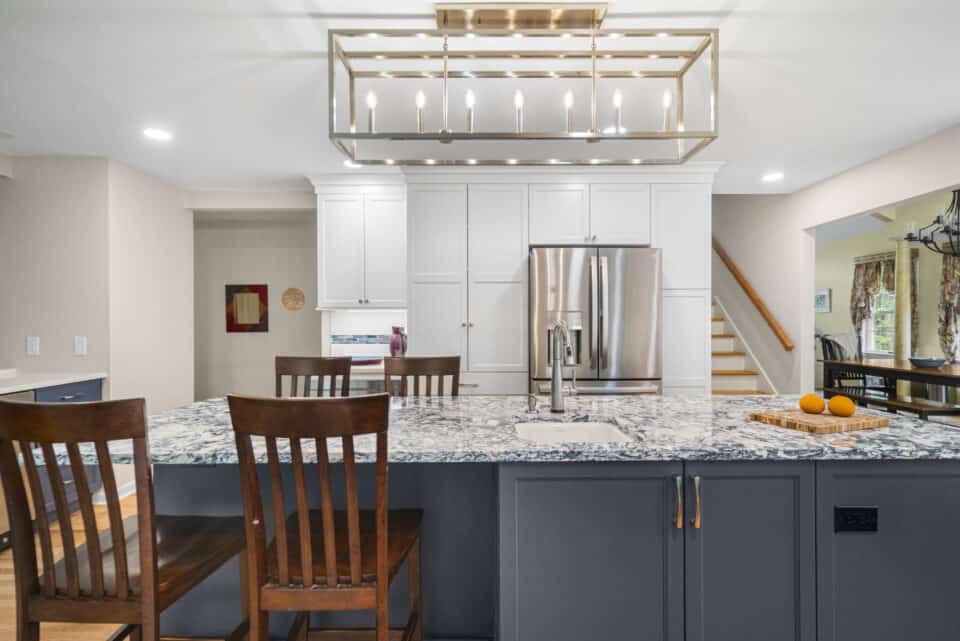
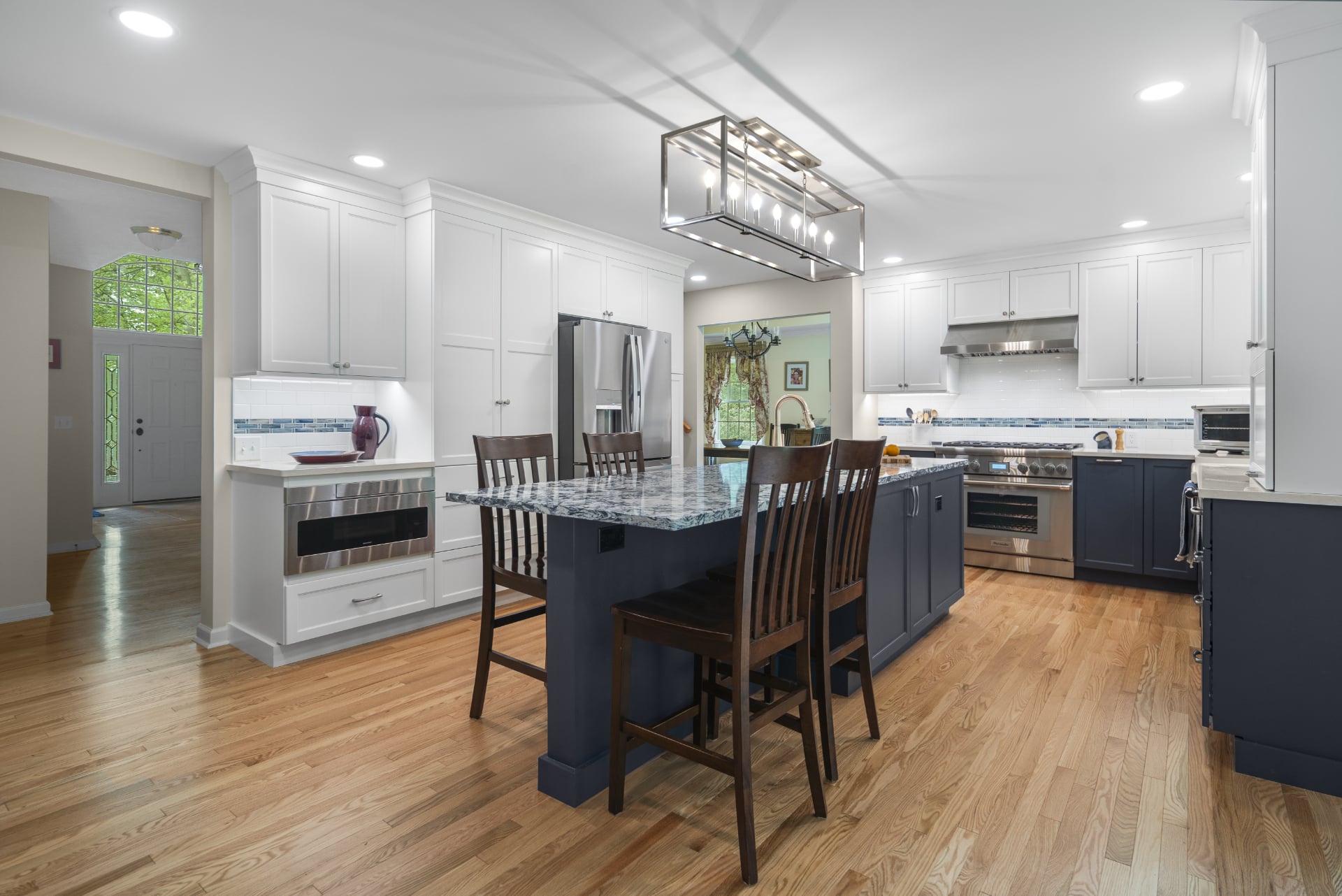
For instance, a kitchen remodel usually calls for a material that can handle plenty of foot traffic, is easy to clean, and resists spills and stains. Many homeowners also avoid extra-hard surfaces in a kitchen since they can be uncomfortable to stand on for long periods.
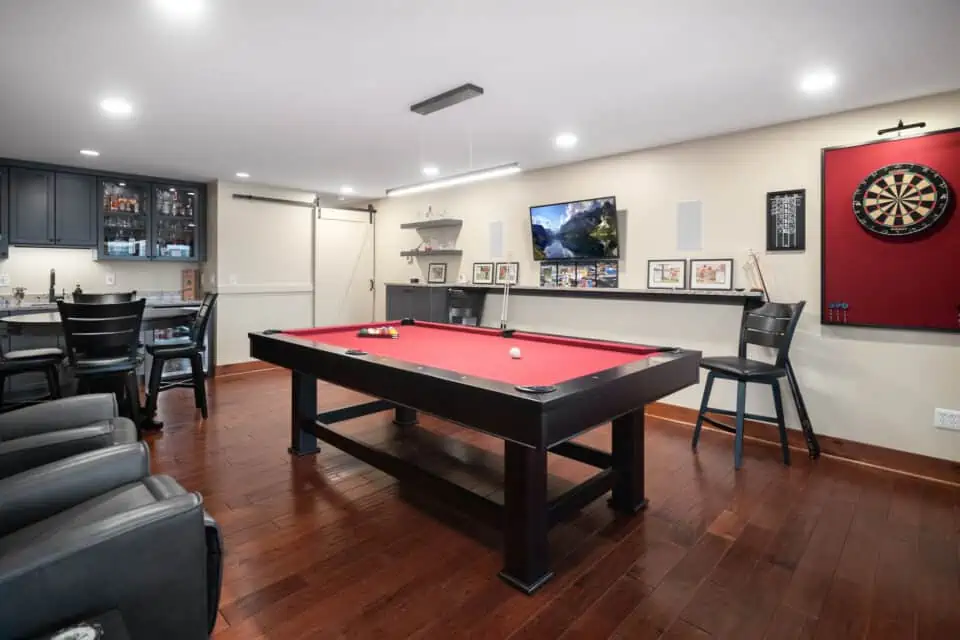
When remodeling a basement, you generally want to avoid flooring that can get damaged by moisture, such as wood and carpet. On the flip side, most materials work well in dining and living spaces, although some people prefer flooring in these areas that are softer and warmer underfoot.
If you’re remodeling a large space, the cost of different materials may become a bigger factor in your decision-making. You may also need to consider the flooring in surrounding areas and how well the existing flooring in those spaces will transition to the new flooring that you want to install.
Consideration #2: Issues with Your Old Flooring

One way to help choose new flooring is by asking direct questions about your existing flooring.
- Would you consider using the same flooring material again?
- If not, what are the reasons why you want to make a change?
Suppose you like the existing material but feel like your older floors need a refresh. In that case, you can quickly narrow down your search and focus only on the color, pattern, or options for hardwood floor repairs instead of the material.
If you feel like you need a change, try to come up with a list of your main complaints about your current floor. With those issues in mind, you can pick out a flooring option with improved functionality that better fits your needs and preferences.
Consideration #3: Durability
Some flooring materials are more durable than others. Often, this means that the material can effectively resist scratches, moisture, and general wear and tear.
Choosing a heavy-duty material can allow you to go decades without having to do another floor renovation project. But those materials can also be more expensive and harder against your feet.
Whether you need a durable flooring option depends on the space. Durability matters more if you are remodeling a high-traffic area like a kitchen or primary bathroom. You might be able to opt for less durable materials in a guest bedroom or storage space.
Consideration #4: Cleaning and Maintenance
Certain flooring choices offer the benefit of easier cleaning and reduced maintenance.
For example, vinyl tends to be resistant to stains and straightforward to clean. A damaged vinyl plank can be replaced relatively easily without taking up the whole floor.
In contrast, a hardwood floor requires more vigilance to use non-abrasive cleaners and avoid moisture buildup. Although it may be possible to repair spot damage on a wood floor, performing hardwood floor repairs can be challenging and may require refinishing the whole floor.
Consideration #5: Climate and Moisture
When choosing new floors, you should account for a room’s climate and moisture level.
In basements, bathrooms, and other areas prone to high humidity or leaks, it’s advisable to install water-resistant flooring. In these spaces, installing carpet, hardwood floors, or making hardwood floor repairs can lead to all kinds of headaches.
The typical room temperature also influences your choice of flooring. A material like ceramic tile feels cool and crisp, which can be bothersome in the winter. On the other hand, compared to materials that retain heat, it may offer increased energy efficiency when running the air conditioning during the summer months.
Consideration #6: Style
One of the most subjective factors affecting your remodel is your sense of style. All flooring options have their texture and look. Whether you lean toward hardwood or other flooring options, you want to pick a material that fits with your interior design sensibilities.
With most types of flooring, you’ll have a wide range of color and pattern options to choose from. But remember that how they look in a catalog or a store may be different from how they look in your home and its lighting. Getting samples to take home can often provide a better idea of what looks best.
Consideration #7: Health and Environmental Concerns

Unfortunately, there is no consensus about which material is the most eco-friendly.
It can be challenging to know the full environmental impact of each type of flooring. Certain materials require more energy to produce or are more difficult to dispose of at the end of their useful life.
Another concern with certain types of flooring is the potential to emit harmful chemicals. For example, vinyl, carpet, and laminate flooring are manufactured with chemical additives and stabilizers. Adhesives used for flooring installation may contain a long list of chemicals. Over time, these products may emit volatile organic compounds (VOCs) that collect in dust, which some people worry can pose a risk to small children.
In general, solid-surface flooring made of natural materials may provide improved indoor air quality. However, there can be huge variability in production methods, so you can’t paint any material with a broad brush. If you’re focused on health and environmental impacts, you may want to look for flooring that has received independent certification for being non-toxic, sustainable, or low in VOCs.
Consideration #8: Cost
Cost is another crucial consideration. Most home remodels involve more than just the floors, so your flooring budget may be just one subset of the total project. As a result, you’ll need to think about how much you want to spend on upgrading your flooring.
One trap that some homeowners fall into is looking only at the cost of the material itself. What really matters, though, is the installed cost per square foot. This accounts for the fact that some options will require more time and labor to install.
Read more: Kitchen Remodel Cost Guide: A Guide for Homeowners
As with many remodeling decisions, you should think about upfront versus long-term costs. Some flooring will be cheaper now but have a shorter lifespan. Other materials have a higher upfront cost but will last for decades. There’s no ‘best flooring’ for every remodel — it all depends on your goals and budget.

Flooring Materials
We said it before, but it bears repeating: there’s no such thing as perfect floor remodel. Instead, in every remodel, we’re looking for the right flooring for that specific job.
In the following sections, we’ll give a quick overview of the main flooring options and their benefits and drawbacks.
Hardwood Flooring
Hardwood flooring is a classic choice. Real wood floors have a comfortable feel and an elegant look that goes with many types of decor.
While hardwood can last for decades, it may require repeated refinishing. It can also be susceptible to water damage and scratches, including from pet nails. Its installed cost is also higher than many other flooring options.
Engineered Hardwood Flooring
Engineered wood planks have a top layer of real wood and supporting layers of fiberboard or plywood. The planks snap together for quick installation and usually come prefinished.
For many homeowners, engineered wood offers the look of hardwood flooring without the high cost and risk of damage from moisture.
The downside to engineered wood is that it can be easily scratched and may not fully capture the classic look of true wood flooring. The seams between planks generally have a small bevel, whereas traditional wood planks are sanded flat.

Laminate Flooring
Laminate flooring is a relatively low-cost and dependable material. It is made with a melamine resin backing and can be given a top coating of different colors or patterns.
Depending on its coating, laminate flooring may be resistant to water or scratches, but this can increase its cost. Laminate can feel hard to walk or stand on, and, compared to hardwood, its texture and appearance can appear too plastic-like for some homeowners.
Luxury Vinyl Plank and Luxury Vinyl Tile
Vinyl flooring comes in various forms, but the most common are luxury vinyl plank (LVP) and luxury vinyl tile (LVT). One of its major benefits is easy installation as the planks or tiles can either click together or be glued in place.
With its simplified installation, this material is more affordable than most hardwood flooring or ceramic tile. It is easy to clean and holds up well against moisture and stains. LVP and LVT are offered in a huge range of colors and patterns.
For people used to hardwood floors, vinyl flooring can feel hard, and stylistically, some people find that it looks too industrial or commercial. Vinyl manufacturing is also energy- and chemical-intensive.
Tile Flooring
Ceramic tile flooring, including porcelain tile, has a high price tag but is highly durable and resistant to humidity and stains. Its durability makes it popular in kitchens and bathrooms, especially since diverse patterns make it easy to find a type of tile that suits your home’s interior design.
On the negative side, ceramic and porcelain tiles can feel cold and hard, making it feel less comfortable to walk or stand on.
In addition, tile flooring is expensive, especially because it requires careful installation. It must be installed on an even surface to prevent cracked or chipped tile.

Carpet
Carpet is often used in living rooms because of its warmer, softer, and more comfortable feel. It tends to prevent noisy footsteps and can be easy to keep clean with regular vacuuming. It is also often a cost-effective flooring option.
A major downside to carpet is its susceptibility to moisture damage and stains. This makes it a poor fit for most kitchens, bathrooms, and basements. Carpet can also wear thin in high-traffic areas.
Stone
Stone floors, such as those made from granite, can look elegant and polished while offering significant durability. However, they tend to be expensive and may require repeated resealing to prevent damage. Among all options, stone floors tend to feel the coldest and hardest.

Frequently Asked Questions About Floor Renovation
Should Flooring Be Installed Under Cabinets?
For most projects, it’s best to extend the flooring under your cabinets. While it can cost a bit more, it makes things much simpler if you decide to replace your cabinets in the future. Putting the flooring under cabinets also creates a more seamless look and feel.
When Should You Replace Your Flooring?
There are many reasons why you may decide it’s time to replace your existing flooring.
“The most obvious factor is the state of your current floors, including any old floors that might need replacement or hardwood floor repairs. If they are damaged or wearing out, then putting in new flooring can be a major home upgrade.
Other factors include your budget and whether you’re planning any other remodeling projects. If you’re already going to do a renovation, it often makes sense to schedule flooring installation simultaneously and request a free quote for planning purposes. This ensures that everything fits together and gets all the necessary work done in one fell swoop.
Ready to Embark on a New Project?
Whether you’re embarking on a major renovation or just looking to update a single room, our in-house design team can help you with the full scale of your project design. Feel free to get in touch for a free quote if you live in the Ithaca, NY, area and are looking for a reliable partner for your next flooring installation, old floor repairs, or general home improvement project.