

When thinking about the ways to upgrade your basement, insulation is easy to overlook. Many homeowners assume that even a finished basement is bound to feel chilly and damp—but it doesn’t have to be that way!
In this post, I’ll explain they you don’t have to settle for a chilly basement space.
I’ll start by covering why basement insulation matters, and then I’ll get into some of the logistical details about insulation that you should know about if you’re planning any type of basement remodel.
Why Does Basement Insulation Matter?
Effective basement insulation not only makes it easier to maintain a consistent temperature, which helps your basement feel more comfortable, it also enhances energy efficiency, reducing your monthly heating and cooling costs.
In many homes, basements are a major source of heat loss because warmth can escape in all directions —through the ground, small cracks in the exterior walls, windows, and even through the floor above. In addition, as warm air rises, your basement can be left feeling much colder than the rest of your home.
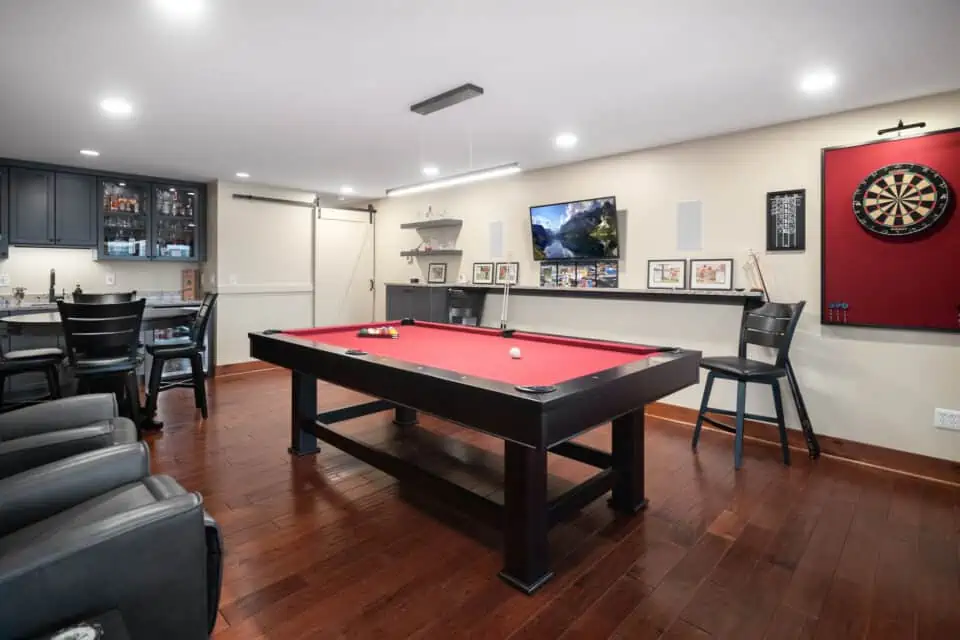
With proper insulation, your basement transforms from a simple storage space to a multifunctional and versatile room.
Beyond comfort and efficiency, insulating basement walls can contribute other benefits:
- Moisture control: When installing insulation, it’s common to add a moisture barrier or vapor barrier. This reduces the risk of mold growth and other moisture problems that can affect the durability of your home.
- Noise reduction: Many types of insulation, including foam insulation, can keep noise from carrying between your basement and main floor. That can be especially important if you want to use your basement for a guest suite, kids’ playroom, music or yoga studio, home office, or media room.
Necessary Steps Before Installing Insulation in Your Basement
Putting insulation around your basement walls can pay dividends, but it has to be done properly. Before you can install insulation, you need to do a thorough evaluation of your basement’s condition, looking primarily at three main issues:
- Water and moisture issues: You don’t want to insulate any walls that have existing moisture problems. A thorough check can help make sure you don’t seal in mold or moisture damage. It also may help to confirm that your basement has proper ventilation that can combat moisture buildup. This is even more important if you’re adding a bathroom to your basement.
- Structural integrity: Similarly, you don’t want to insulate around any part of your home that has cracks, weaknesses, or other issues. Before insulating, you want to do a careful assessment, looking over entire walls for any signs of structural damage.
- Radon levels: If your basement has high radon levels, you may need to remediate that issue before insulating the basement walls.
In addition to examining these elements, you’ll want an experienced remodeling professional to look at the slope and soil of your lot, the structure of your home and foundation, and the positioning of your basement (including any above-grade portions or crawl spaces). Having all of this information enables a remodeler to prepare a plan to insulate your basement.
Indoor and Outdoor Basement Wall Insulation
Basement insulation can be installed on the inside or outside of basement walls. Each approach has certain benefits and drawbacks.
Interior Insulation
Insulating the interior basement walls involves placing materials along the walls to reduce heat loss. Examples of materials that can be used include rigid board insulation, foam board insulation, and closed-cell spray foam. Fiberglass insulation is less commonly used because of its potential to have moisture issues.
For this approach, it is essential to account for the potential impact of interior insulation on moisture buildup. Insulation may create more condensation around foundation walls, and having another layer of material may hide dampness or mold growth. Professional installation can address these concerns proactively to ward off major problems in the future.
Interior insulation is more economical, but it can have limits in preventing heat loss. If the interior walls include basement windows, electrical panels, or other wall features, it can be more difficult to prevent heat leaks.
Outdoor Insulation
Outdoor or exterior insulation can be extremely effective at minimizing lost heat, but it is more expensive to install and involves more complex construction work to retrofit.
Exterior insulation involves digging down around the basement walls, waterproofing the area, and then insulating, such as with plastic foam boards. That may sound simple, but it requires careful attention to detail to keep water and moisture from creeping in. The work is also more disruptive and will have more impact on landscaping and other features around the outside of your basement walls.
Hiring the Right Team for Your Basement Insulation Project
Each step of installing basement insulation requires expertise. From inspecting your current basement to installing new insulation materials, it pays to have an experienced team that knows how to make sure that they aren’t sowing the seeds for future problems. Insulating your basement isn’t a simple weekend DIY project but something that demands the work of a professional.
For more than 30 years, Upscale Remodeling has been helping clients with high-end renovation projects that require the utmost care and attention. Whether it’s a recently built lake house or a historic home here in the Ithaca area, we have the skills and experience to deliver the highest-quality remodel.If you’re considering a basement project and want to learn more about how installing insulation can benefit your home, we invite you to contact us to schedule an appointment. You can also learn more about our team and our process on our website.