
If a bathroom renovation is on your radar, you’ve probably already started daydreaming about walking into your dream bathroom. Or maybe a bath remodel would be part of an entire home remodeling process. You may be asking yourself, “How quickly can we make that dream bath a reality?”
Every home renovation project has its own needs and specifications, which means there’s no uniform timeline for a bathroom remodeling project. However, the professional bathroom remodeling process follows certain stages that dictate how long it normally takes to get the job done.
In this post, I want to offer some clarity about just what it is that goes into revamping a bathroom space. I’ll give high-level information about how long remodeling takes, the stages involved, the various factors that impact the timeline, and how you can move your entire project along as quickly as possible.
How Long Does a Bathroom Remodel Take?
It’s natural for most homeowners to want to push ahead quickly and get going with demolition, construction, and installation. But you can’t speed-run through the design process, which is fundamental to achieving a high-quality result.
In fact, trying to move too fast at the outset of your home renovation project can end up causing major delays down the line. If a remodel isn’t properly planned out or if there’s no wiggle room in the schedule, things will almost certainly go off-track. Even worse, rushing through the planning stages can lead to a subpar design, giving rise to unexpected expenses during the remodel and reducing your satisfaction with the renovation after it’s done.

What Are the Stages of a Bathroom Remodel?
There are several distinct phases or stages for almost every bathroom remodel. Of course, the exact steps and timing can vary based on the project, but I’ll try to give an overview of each stage and how long it usually takes. Most remodeling projects—bathroom renovation projects, kitchen remodels, or even whole home renovations—follow a similar type of timeline.
With this information, you can set realistic expectations about the length of just about any home remodel timeline.
Pre-Construction Stage
The pre-construction phase involves essential tasks to plan the project and prepare for on-site work. This stage typically takes between one and four months.
The key parts of the pre-construction phase of your home remodeling project include the following:
Pre-Construction Bathroom Remodeling Steps
Pre-Construction Stage
The pre-construction phase involves essential tasks to plan the project and prepare for work on the construction site. This stage typically takes between one and four months.
The key parts of the pre-construction phase of your home remodeling project include the following:
Pre-Construction Bathroom Remodeling Steps
- Kickoff: In this initial meeting, you can explain your vision and goals for the bathroom remodel to the interior designer or other people drawing up the plans. This is also an opportunity for them to take measurements and photos of the space.
- Research: After the kickoff, there may be a research phase for you and the design team to look into different materials, layouts, or stylistic approaches.
- Design work: The designer works with your specifications and measurements to create a conceptual design for the renovation. During this process, open communication helps with any necessary design revisions to really zero in on the project plan.
- Budgeting: The conceptual design comes with an estimated budget. If the budget needs to be adjusted, a cost breakdown can identify potential savings and upgrades.
- Decision-making: In this step, you finalize decisions about the budget, materials, and design, and ultimately, you must sign a contract.
- Permitting: A design-build firm or contractor will obtain the necessary permits for the project. There can be dead days in the schedule at this point, depending on how quickly permits are issued. Given the scope of work, permitting may take longer for a full-home remodel than a smaller project, like a single bathroom upgrade.
- Acquiring materials: The residential remodeler will order materials and make plans for materials delivery to the work site with appropriate lead time. Common materials like tile and standard fixtures like a toilet usually don’t take long to acquire. But there can be delivery delays for specialty materials or anything that has supply interruptions.
- Reviewing the schedule: Before starting the work, the team will go over the planned project schedule. Clear communication with the project manager lets you know more or less how things should proceed if there aren’t any unexpected surprises.
- Dust control plan: The contractor will take concrete steps to remediate dust and debris during the construction. If you have any particular concerns about the remediation plan, this is the time to bring them up.
- Walkthrough: Shortly before construction starts, you and the contractor will take a look at the space and make sure you are on the same page about the upcoming work.
- Site prep: To get the bathroom ready for the renovation, you will need to remove your personal items. The construction team may put tape or other markers on different surfaces to coordinate demolition.
As that list demonstrates, the pre-construction stage involves many individual steps to get ready to remodel a bathroom. For larger projects or gut renovations, there are more time-consuming details to handle, leading to a longer general estimate of the timeline. Since you can’t skip ahead, delays in any one step can increase the total time needed to complete the renovation.

Demolition Stage
The demolition phase usually takes one to two days. As you might expect, demolition can be loud, so you should be prepared for disruptions if you are at home while this work is going on.
Rough-in Installation and First Inspection Stage
The rough-in process is the initial installation stage of a home renovation, particularly in a bathroom renovation. During rough-in, all the electrical wiring, plumbing lines, vents, and other mechanical connections are set up so that fixtures can be connected later.
There can sometimes be delays during rough-in, especially if it reveals the need for plumbing and electrical changes. Unfortunately, these issues may not become apparent until demolition is complete, and they can require additional labor to take care of.
After the rough-in, there may be a need for an inspection to make sure that everything complies with local building codes.
Installation of New Bathroom Components Stage
The new components to install in a bathroom remodel depend on the design plan. We’ll go over some of the most common steps and how long they can take, but keep in mind that not all remodeling projects will include all of these steps. In addition, the exact order of the work can vary depending on the project and the availability of tradespeople with specific skills.
Wall and Shower Tile Installation
Shower and wall tile installation often takes about a week to finish. Obviously, the total amount of space where you’re putting tile affects the timeline for this step, but it’s hard to rush through tile installation since it requires precision and attention to detail, much like custom cabinetry in a kitchen renovation.
Flooring Installation
If you’re putting in new flooring, that step normally takes one to two days. However, some types of flooring are more complicated to install. For example, porcelain or ceramic floor tiles can take longer to put in properly than snap-down vinyl tiles.
Bathroom Vanity Installation
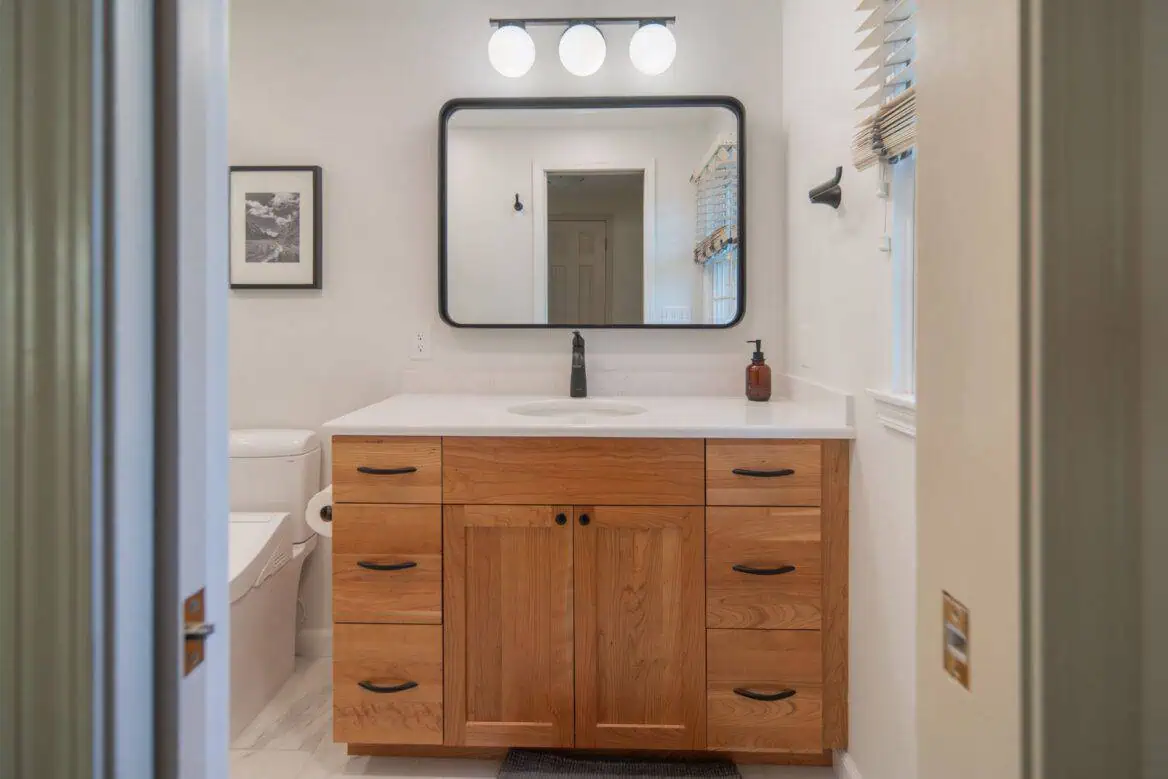
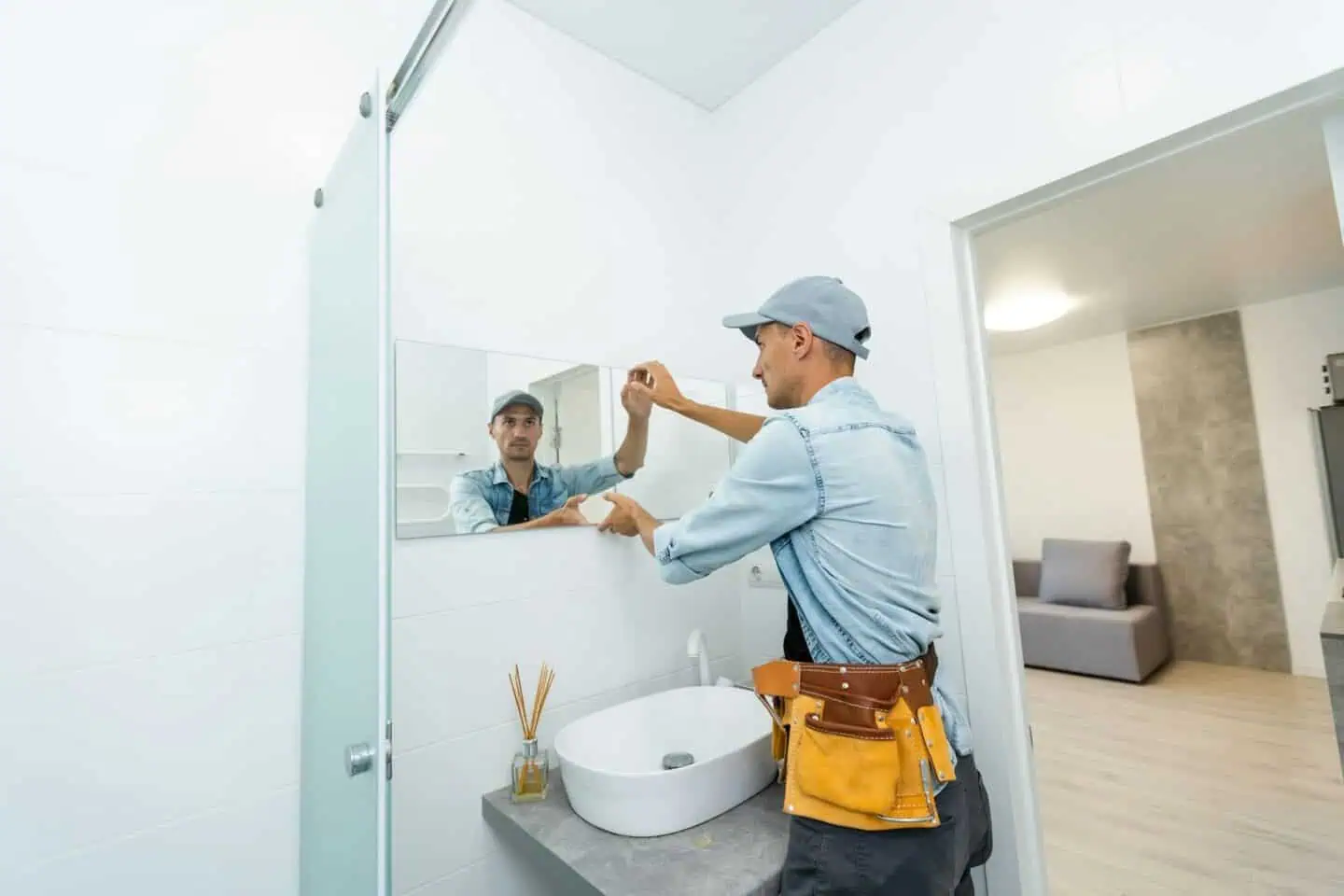
If you’re putting in a new vanity, that can usually be completed in one day. This isn’t the most complex part of the project, but large and multi-faceted vanities take care to install properly.
Shower Pan and/or Tub Installation
We normally budget one to two days for installing the shower pan, tub, or both if it’s a larger renovation. While this may seem straightforward, a shower pan must be installed correctly to avoid leaks and water damage in your house.
Plumbing and Electrical Finishes
Putting in the plumbing and electrical finishes generally takes about a day. In this step, everything gets hooked up, including the faucets, toilet, shower heads, and light fixtures.
If all the plumbing and electrical work was done correctly during the rough-in, there shouldn’t be hiccups at this stage. Nevertheless, it’s a key step that helps make your bathroom remodel feel closer to the finish line.
Inspection
Inspections are required for many projects, though not all, depending on the size and scope of your project. In some cases, more than one type of inspection may be needed, such as framing, electrical, insulation, plumbing, and others. The timeline for inspections will depend on the availability of the inspectors.
Read More: Basement Bathroom Remodel: Planning to Add a Bathroom to Your Basement
Finishing Touches for a Bathroom Remodel
The final finishes of a bathroom renovation involve transforming it into your dream space by installing trim, painting the drywall, and adding decorative elements. Most of this work can be completed in a few days to a week.
Installing Trim
This step can take a couple of days, depending on the size of your project and the specific design details involved. It includes putting in baseboard trim as well as trim around windows and doors.
Painting
Painting usually takes one to two days, but this is dependent on how much surface area needs to be painted. Painting cabinets, accent walls, or other decorative elements may require extra time to finish.
Installing Decorative Pieces
It normally takes a day to put in all the little functional and decorative elements like towel bars, grab bars, toilet paper holders, and robe hooks.
Post-Construction Phase
This stage can last anywhere from a few days to a few weeks. It includes a walkthrough and wraps up a list of final items to finish, such as any remaining touch-ups, decor tweaks, etc. (known collectively as the punch list). Proper coordination during this phase is crucial to keep the project running smoothly. This stage may involve a final inspection to ensure that your bathroom remodel meets local building codes.
Why Choosing an Experienced Contractor Affects the Bathroom Remodeling Timeline
Who you choose to do a bathroom remodel can influence both the timeline and quality of work.
When starting your project, you can follow one of two main approaches:
- Design-bid-build: In this model, you hire a designer to create the remodeling plan, then you contact general contractors for bids, and then you hire one of those contractors to do the work.
- Design-build: With the design-build model, a single firm does both the design and the actual remodeling on a single contract.
In our 30-plus years in the industry, we’ve found that the design-build approach is beneficial in terms of how quickly and how well the work is done. We focus strictly on design-build projects to ensure the overall quality and delivery of projects.
The design-build process is more complete and customized than other approaches, such as basic pull-and-replace renovations. Custom design may take longer in the early stages, but the result is tailored to your unique needs and tastes.
The team approach in the design-build model also helps keep the project on time and on budget. Design-bid-build requires you to shop around for a general contractor once you have your plans ready, and you may find your project gets delayed (or is not even feasible) if your contractors tell you that your design is much more expensive to build than you expected.
By hiring a design-build firm, you get the convenience of a single point of contact along with the quality standards that come from a unified team of designers and craftspeople working collaboratively, from the kickoff meeting through the final inspection, to bring your dream bathroom to life.
This approach ensures that your dream home is delivered efficiently, with expert construction management navigating any potential delays to keep the project on track and within budget.

What Factors Influence the Timeline of a Bathroom Remodel?
Not all bathroom remodels take the same amount of time. Various factors can cause a project to take longer in both the pre-construction and construction stages.
Bathroom size is one of the most important determinants of a bathroom remodel timeline. A lot more work goes into a primary bathroom with a lot of space and larger square footage than a small bathroom or powder room.
Project scope is another essential consideration. A complete overhaul of a bathroom—involving things like stripping down to the wall studs, removing walls, or major plumbing or electrical work—is going to demand a longer timeline than a more straightforward remodel.
The availability of materials is an external factor that can influence the project timeline. While most pandemic-related supply chain problems have been resolved, there can still be occasional delays, especially for specialty fixtures, tiles, or other materials.
Worker availability, especially for specific trades, may affect the day-to-day schedule of your remodel. Experienced firms know how to prevent bottlenecks with their subcontractors to avoid project delays.
Another factor is the time required for obtaining permits. Some localities have streamlined the process, but in some areas, there can be delays in getting city permits approved. In Ithaca, NY, where we are located, the permitting process for bathroom remodels is generally straightforward, and long delays are infrequent.
The last factor that warrants being mentioned is unexpected issues that rear their ugly head during the remodeling process. As experienced remodelers, we do everything we can to avoid this, but sometimes, problems arise despite the best of plans.
How to Speed Up the Bathroom Remodel Timeline and Keep the Project Running Smoothly
There’s no way to just snap your fingers and make bathroom remodeling happen faster. That said, we do have some practical tips that can help move your project forward as efficiently as possible. Understanding and managing your home renovation timeline is crucial for a smoother and more successful project experience.
- Start early: If you know that you want a renovation done by a certain date, start early and give yourself extra time.
- Get ideas on paper: As soon as you start thinking about remodeling your bathroom or kitchen, start taking notes. List what you don’t like about your old bathroom. Create lists of “must-haves” and “nice-to-haves” for your new bathroom. Our kitchen remodel checklist can guide you through planning your kitchen renovation. Brainstorming ahead of time helps you hit the ground running at your kickoff meeting.
- Choose an experienced and quality contractor or design-build firm: There’s an old saying, “If you don’t have the time to do it right, how are you going to find the time to do it twice?” We’ve been in the industry long enough to know that there’s a lot of wisdom in that. Hire someone honest about the realities of a remodeling timeline, even if it’s longer than you’d like. Don’t hire a contractor who promises you the moon only to cut corners trying to meet a rushed schedule.
- Be decisive: One thing you can directly control is how long it takes you to make decisions, including choosing who you hire, picking materials, and agreeing on a final design and budget. Avoid making changes or requests late in the process, as these can throw off the project’s timing.
- Maintain communication: Work with your project consultant to make sure you understand the timeline. Keep in contact as the project moves forward so that you’ll still be in good shape even if everything doesn’t go exactly according to plan.
- Plan ahead: When you get the construction schedule, ask what you need to do to prepare your home. If you’re remodeling your only bathroom, you likely will need to find another place to stay while the work is done. Make these arrangements ahead of time to avoid delaying the schedule.